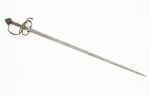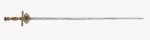
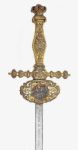
Court Sword
- Dated: third quarter of the 19th century
- Culture: Spanish
The cast grip features a crown pommel, while guard shows the badge of the Equestrian Order of the Holy Sepulcher of Jerusalem enameled in orange. The sword has a straight, double-edged blade struck, “FABRICA DE TOLEDO 1868” at the forte.
Sidenotes:
- The Equestrian Order of the Holy Sepulchre of Jerusalem (Latin: Ordo Equestris Sancti Sepulcri Hierosolymitani, OESSH) is a Roman Catholic order of knighthood under the protection of the pope. It traces its roots to Duke Godfrey of Bouillon, principal leader of the First Crusade.
- In 1496, Pope Alexander VI created the office of Grand Master of the Order, and the office vested in the papacy.
- The office of Grand Master remained vested in the papacy until 1949.
- Since then a cardinal has been grand master.
- The Pope is sovereign of the Order, and it enjoys the protection of the Holy See and has its legal seat at Vatican City.
- Five major orders were formed in the Holy Land between the late 11th century and the early 12th century: the Knights of the Holy Sepulchre (circa 1099), Knights Templar (circa 1118), Knights Hospitaller (circa 1099) (St John), Knights of the Hospital of St Mary of Jerusalem (Teutonic Knights) and Knights of St Lazarus.
Source: Copyright © 2016 Auction Flex
Tag: history
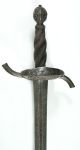
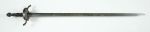
Broadsword
- Medium: steel, leather
Source: Copyright © 2016 The Fitzwilliam Museum, University of Cambridge, UK
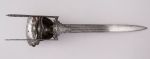
Katar Dagger
- Dated: 17th century
- Geography: Thanjavur, Tamil Nadu
- Culture: Indian, Thanjavur; blade, European
- Medium: steel
- Measurements: L. 21 ¾ in. (55.2 cm); W. 5 in. (12.7 cm); Wt. 2 lbs. 3 oz. (992.2 g)
- Provenance: [William Ockelford Oldman, London, before 1935; sold to Stone]; George Cameron Stone, New York (by 1934–d. November 18, 1935; his bequest to MMA

Christmas for a sword fighter could involve this book, ‘The Sword of Combat’ by François Dancie, soldier and duellist. Get the translation at
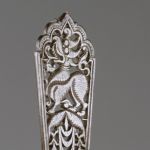
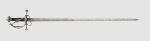
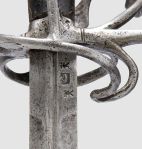
Sword
- Dated: 17th century
- Culture: European
Source: Copyright © 2015 Musée de l’Armée, Dist. RMN-Grand Palais/Photo: Emilie Cambier
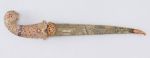
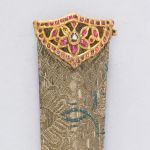
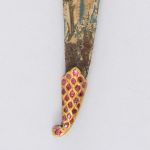
Khanjar Dagger with Sheath
- Dated: 18th century
- Culture: Indian, Mughal
- Medium: Steel, rock crystal, gold, silver, rubies, diamonds, emeralds, textile, wood
- Measurements: L. 15 ¾ in. (40.01 cm)
Cut and thrust Sword
- Dated: circa 1560
- Culture: German
- Measurements: overall length 102 cm
The sword features a straight blade with a short groove on both sides, and with three smith marks on both the obverse and reverse sides of the ricasso, an iron knuckle bow hilt, cut pommel and a leather-covered grip.
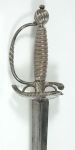
Small Sword
- Dated: circa 1760
- Production: England (hilt); France (blade)
- Medium: steel, leather, silver
- Provenance: Mr James Stewart Henderson of ‘Abbotsford’, Downs Road, St Helen’s Park, Hastings, Sussex
Small sword with a colichemarde type blade. The scabbard is covered with leather, and has silver mounts. The top suspension loop is engraved ‘Feesey pallmell’.
Source: Copyright © 2015 The Fitzwilliam Museum, University of Cambridge, UK
Dress Sword
- Dated: 1650-1700
- Culture: German
- Medium and techniques: copper, wire, gilt, blued steel/burnished, chiselled, overlaid, matted, hatched, etched
- Measurements: overall length 103.7 cml blade length 87.5 cm
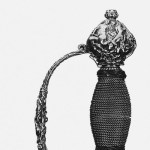
The sword features a burnishd steel hilt with egg-shaped pommel, a tang button, scrolled quillon and knuckleguard. All are chiselled with figures, stylisd foliage, fruit and overlaid with gold. The grip is bound with copper wire, while the straight double-edged steel blade is etched with scrolls and flowerheads.
Source: Copyright © 2015 Royal Collection Trust/Her Majesty Queen Elizabeth II
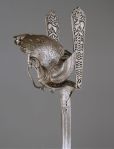
Sword
- Culture: European
- Medium: steel
- Measurements: height: 0.977m; width: 0.18m; depth: 0.035m
Source: Copyright © 2015 Musée du Louvre/Photo: Stéphane Maréchalle