

Left-hand Dagger
- Dated: circa 1560
- Culture: German
- Place of Origin: Germany
- Technique: casting
- Medium: steel
Source: Copyright © 2017 The Fitzwilliam Museum, University of Cambridge
Left-hand Dagger
- Dated: circa 1560
- Culture: German
- Place of Origin: Germany
- Technique: casting
- Medium: steel
Source: Copyright © 2017 The Fitzwilliam Museum, University of Cambridge
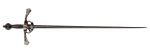


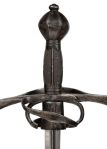
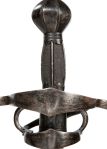
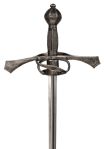
Estoc of the Trebanten Guard of the Prince Electors of Saxony
- Dated: 1580
- Culture: German
- Medium: steel, iron, fish-skin
- Measurements: overall length 127 cm (50 inches)
The iron hilt is formed of flattened bars comprising of a pair of long quillons drooping slightly towards fish-tail terminals. The large D-shaped ring-guard is placed between and has a smaller version below, carried by a pair of arms, each ring widening towards the middle.
The inner guard is formed from a single diagonal bar, linking the head of the forward arm to the base of the rear quillon, the base of the hilt with an oval decorated tubular sleeve to fit over the mouth of the scabbard. The octagonal pommel swells about the middle and it’s cut with a pairs of narrow segmental flutes and rising to an octagonal bun-shaped button.
The grip is reinforced by moulded slender bars set between a pair of cusped and linear engraved collars and retaining its original fish-skin cover. The mounted contingent of the Saxon Trebanten guard was formed of a company of one hundred men on black horses.
Their uniform included a blackened comb morion with etched and gilt ornament, black doublets and yellow hose and stockings, the colours being those of the Arms of the Electors of Saxony.
Source: Copyright © 2016 Curator’s Eyes
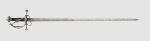

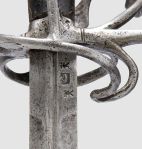
Cut and thrust Sword
- Dated: circa 1560
- Culture: German
- Measurements: overall length 102 cm
The sword features a straight blade with a short groove on both sides, and with three smith marks on both the obverse and reverse sides of the ricasso, an iron knuckle bow hilt, cut pommel and a leather-covered grip.


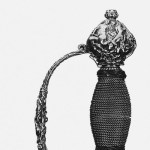

Dress Sword
- Dated: 1650-1700
- Culture: German
- Medium and techniques: copper, wire, gilt, blued steel/burnished, chiselled, overlaid, matted, hatched, etched
- Measurements: overall length 103.7 cml blade length 87.5 cm
The sword features a burnishd steel hilt with egg-shaped pommel, a tang button, scrolled quillon and knuckleguard. All are chiselled with figures, stylisd foliage, fruit and overlaid with gold. The grip is bound with copper wire, while the straight double-edged steel blade is etched with scrolls and flowerheads.
Source: Copyright © 2015 Royal Collection Trust/Her Majesty Queen Elizabeth II
 Marie's Fitness Blog